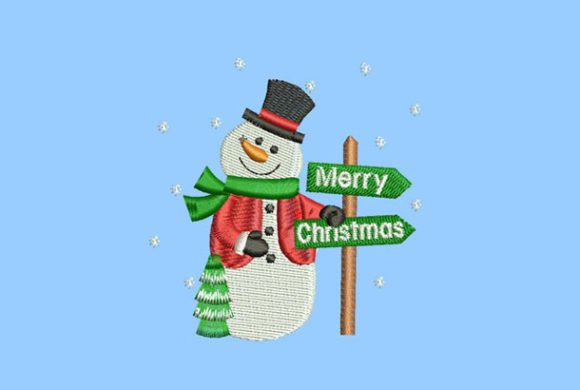
Snowman with Christmas Hat: Merch Design Review
As a professional embroidery designer specializing in commercial branding and small business merchandise, I approach every digital asset with a critical eye toward production viability. When evaluating the Snowman with Christmas Hat machine embroidery design, my primary focus is not just on seasonal charm, but on how this graphic translates into profitable, durable, and brand-appropriate products for cafes, boutiques, bakeries, and creative studios. This review analyzes the technical performance and commercial application of this specific embroidery file for business owners looking to expand their holiday product lines.
Visual Personality and Brand Alignment
The first impression of the Snowman with Christmas Hat design suggests a balance between playful tradition and clean vector aesthetics. For a small business, this visual tone is crucial. It avoids being overly juvenile, making it suitable for adult-oriented merchandise like staff uniforms or premium tote bags, while retaining enough warmth to appeal to families and holiday shoppers. The silhouette-driven nature typical of snowman designs often allows for bold readability at a distance, which is essential for cap embroidery and apron branding where intricate details can get lost.
From a brand identity perspective, this design serves as an excellent seasonal accent rather than a permanent logo replacement. It signals to customers that your handmade product line or local business is current, engaged, and celebratory. Whether you are a florist adding festive touches to delivery aprons or a coffee shop creating limited-edition winter merch, the friendly yet structured appearance of this snowman supports a professional image. It bridges the gap between rustic handmade charm and polished commercial embroidery standards.
Commercial Applications for Small Business Merch
In real-world business scenarios, the versatility of the Snowman with Christmas Hat design determines its return on investment. Based on standard digitizing principles for seasonal graphics, here is how this design performs across key merchandise categories:
- Embroidered Patches: This design is ideal for patch production due to its likely defined borders. Patches require high stitch density and clear outlines to prevent fraying. A snowman motif typically offers sufficient fill area to anchor the patch backing securely, making it a safe choice for resale or staff recognition awards.
- Staff Uniforms and Aprons: For cafes and bakeries, placing this design on the chest or sleeve of an apron adds immediate seasonal context without compromising uniform professionalism. The design acts as a conversation starter with customers, enhancing the service experience.
- Tote Bag Design: Canvas totes provide a stable, flat surface perfect for this type of embroidery file. The contrast of white thread against natural canvas or dark holiday colors creates high visibility. This application works exceptionally well for boutique gift-with-purchase promotions or standalone retail items.
- Cap Embroidery: Headwear presents unique challenges due to curvature. If the Snowman with Christmas Hat maintains a compact vertical aspect ratio, it will digitize well for caps. However, designers must ensure the hat detail does not distort when stitched on a curved brim area.
- Product Packaging Accents: Beyond apparel, consider stitching this design onto fabric tags, drawstring pouches, or reusable gift wraps. These custom apparel add-ons elevate the perceived value of physical goods and reinforce brand consistency during the unboxing experience.
Technical Considerations and Production Risks
While the aesthetic is appealing, successful commercial embroidery relies on technical precision. As noted in the product description, any alteration on the files may affect the output. This warning is significant for businesses planning to resize or modify the design for different applications. Resizing a machine embroidery design by more than 10-20% can compromise stitch integrity, leading to gaps in coverage or excessive thread breaks.
Business owners must exercise caution in the following areas:
- Stitch Density and Fabric Texture: If applying this design to textured fabrics like fleece or terry cloth, the stitch density must be adequate to prevent the fabric from poking through. Conversely, on lightweight performance wear, excessive density can cause puckering. Always match the stabilizer to both the fabric weight and the design's stitch count.
- Small Patch Sizes: Reducing the Snowman with Christmas Hat for tiny labels or袖 accents requires scrutiny. Fine details in the hat brim or facial features may merge at smaller scales. Test the minimum viable size before committing to bulk production.
- Thread Color Contrast: Seasonal designs often rely on specific colorways. Ensure your thread colors have sufficient contrast against your chosen garment base. A white snowman on a cream sweater lacks definition and looks unprofessional. Verify Pantone matches if maintaining strict brand guidelines.
- Washability: Merchandise intended for frequent use, such as barista aprons or dish towels, demands durable construction. Ensure the design uses appropriate underlay stitches to maintain shape after industrial laundering.
Designer Notes: Pre-Production Best Practices
To maximize the success of the Snowman with Christmas Hat in your business workflow, adhere to these professional testing protocols. Remember to always run a sample of the files on the test fabric before stitching on final goods. This step is non-negotiable for protecting your inventory and reputation.
- Create Printable Mockups First: Before hooping any fabric, generate a printable mockup to visualize scale and placement. Compare the design beside other brand assets to ensure visual harmony. Share this mockup with clients or stakeholders for approval to avoid costly re-stitches.
- Test in Black and White: Run a grayscale or single-color test stitch-out. This reveals the underlying structure and registration accuracy without the distraction of multiple thread colors. If the design reads clearly in monochrome, the color version will be successful.
- Verify Hoop Size Compatibility: Confirm that the design fits comfortably within your available hoop sizes with adequate margin for clamping. Tight hooping leads to distortion; ensure you are using the correct hoop for the specific dimension of this embroidery file.
- Assess Stabilizer Requirements: Do not guess. Test cut-away versus tear-away stabilizers on your actual production fabric. For stretchy knits used in custom apparel, cut-away is usually mandatory to prevent warping around the snowman’s perimeter.
- Confirm Commercial Licensing: Before selling any finished product featuring this design, verify the license terms included with the digital embroidery file. Ensure you have the rights to use the artwork for commercial embroidery and branded merchandise sales.
- Evaluate Finished Product Value: After sampling, assess whether the embroidered result justifies your pricing. Does the stitch quality reflect your brand standards? Is the design recognizable and attractive? Only proceed if the answer is yes.
Impact on Customer Trust and Sales
Integrating the Snowman with Christmas Hat into your product lineup is more than a decorative choice; it is a strategic business decision. High-quality seasonal embroidery demonstrates attention to detail and respect for the customer experience. When buyers see crisp, well-executed stitching on a tote bag or uniform, it reinforces trust in your overall brand quality. Poorly executed embroidery, conversely, can devalue even the finest base garments.
For Etsy sellers and handmade brands, this design offers a pathway to create cohesive holiday collections that encourage bundling and higher average order values. By treating this embroidery file as a professional asset subject to rigorous testing and thoughtful application, you transform a simple seasonal graphic into a powerful tool for engagement, recognition, and revenue growth. Always prioritize the integrity of the finished product over speed, and let your craftsmanship speak to the quality of your business.