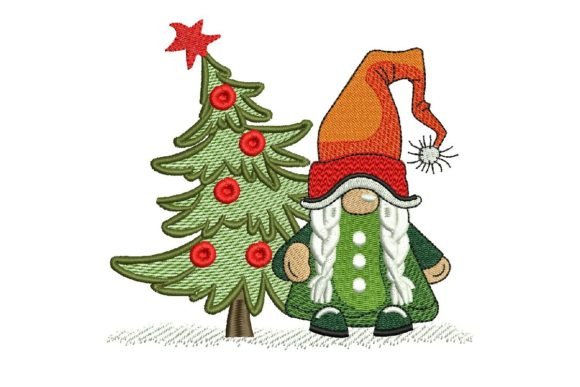
Gnome with Christmas Tree: A Craft Fair Review
As an experienced embroidery designer preparing for the upcoming holiday market season, I approach every new machine embroidery design with a critical eye. The question is never just "is this cute?" but rather "will this sell at my booth?" and "can I produce it efficiently?" When evaluating the Gnome with Christmas Tree design, I am looking for that perfect intersection of festive charm and commercial viability. This review breaks down how this specific design performs in real-world production scenarios, from digitizing integrity to customer appeal at a busy craft fair.
First Impressions: Festive Charm Meets Production Efficiency
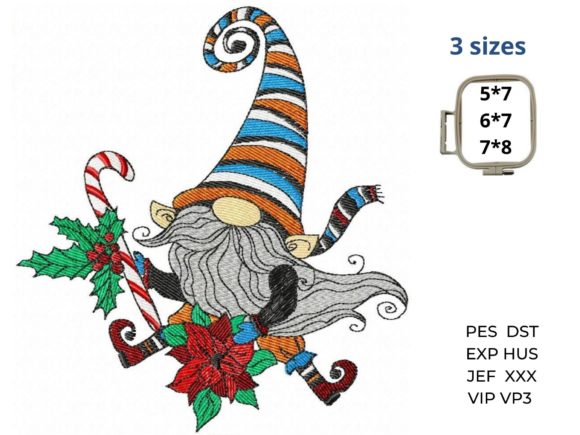
My initial assessment of Gnome with Christmas Tree suggests a design that balances whimsy with elegance. Gnomes have remained a staple in farmhouse and rustic holiday decor for years, but this iteration feels refined rather than cartoonish. The description notes it is "fun and easy to stitch," which immediately signals to me as a business owner that the digitizer has likely optimized the pathing. For a craft fair product, time is money. A design that looks gorgeous but requires excessive trimming or complex re-hooping is a liability during batch production.
Visually, the combination of the gnome figure with the Christmas tree element creates a self-contained scene. This is crucial for standalone products like patches or ornaments where you do not have additional text or borders to frame the image. It reads clearly from a distance, which is the first test of any successful handmade product. If customers cannot identify the motif from five feet away while walking through a crowded venue, the design fails regardless of its intricate details up close.
Best Applications for Market Booths and Etsy Listings
Determining the right blank is half the battle. Based on the composition of Gnome with Christmas Tree, I have identified several high-potential applications for both physical markets and digital storefronts.
- Tea Towel Embroidery: This is arguably the strongest application. Flour sack towels or linen tea towels provide a smooth canvas that allows the "elegant" stitching to shine. The vertical orientation often found in gnome designs fits perfectly above the hemline of a standard towel.
- Tote Bag Design: Canvas market bags are top sellers during the holidays. Because this design is described as high-quality and gorgeous, it elevates a simple tote into a premium gift item. Ensure the placement is centered and high enough so the bag’s contents don’t obscure the art.
- Embroidered Patch: If the design scales down well without losing clarity, it makes an excellent stocking stuffer or add-on sale. Patches have a high perceived value relative to their low material cost.
- Apron Embroidery: Holiday baking is a massive niche. Placing this design on the bib or lower pocket of a festive apron targets the home baker demographic effectively.
For Etsy sellers, this design photographs exceptionally well because of its distinct silhouette. Unlike abstract patterns that can look muddy in thumbnails, a gnome holding or standing beside a tree offers immediate visual recognition in search results. Creating a printable mockup or staging a flat lay with pine branches and cinnamon sticks will enhance the cozy aesthetic and drive clicks.
Production Practicality and Batch Stitching
When I prepare my table display, I need inventory depth. Gnome with Christmas Tree appears suitable for multi-needle machines or single-needle batching due to its implied color structure. However, always verify the stitch density before committing to a large run. Designs labeled "easy to stitch" usually avoid excessive underlay or trappy fills, but you must confirm this in your software.
If you are running a commercial embroidery setup, check the number of color stops. Fewer stops mean faster turnaround times. If the design uses blended thread colors to create shading, ensure your machine can handle the transitions smoothly. For small shop owners using single-needle machines, consider whether the thread colors are standard holiday shades you already stock, or if you need to order specialty metallics or variegated threads to achieve the promised elegance.
Critical Technical Considerations for Quality Control
Even a beautiful digital embroidery file can fail if applied incorrectly. As professionals, we must anticipate potential issues before they ruin expensive blanks. Here are my specific cautions for working with Gnome with Christmas Tree:
- Fabric Texture Compatibility: While the description states it works on "any fabric," exercise caution with high-pile textures like terry cloth or fleece. The "tiny details" mentioned in typical gnome beards or tree needles can get lost in the nap. Always use a water-soluble topping to keep stitches crisp.
- Stabilizer Selection: Do not rely solely on tear-away backing for woven fabrics like cotton totes or aprons. Use a medium-weight cutaway to prevent puckering, especially if the design has dense satin stitch outlines. Puckering kills the "premium" look instantly.
- Hoop Size Verification: Before purchasing or stitching, confirm the exact dimensions against your available hoops. Nothing halts production faster than realizing a design is 5mm too wide for your largest hoop. Leave adequate margin for hooping tension.
- Small Lettering Risks: If the design includes text elements (e.g., "Merry Christmas"), test the legibility at the smallest intended size. Satin stitch text below 4mm often becomes unreadable. If necessary, edit the file to remove text for smaller applications like caps or baby bibs.
Enhancing Perceived Value and Brand Consistency
The success of a finished product relies heavily on presentation. Gnome with Christmas Tree lends itself to storytelling. When displaying these items at a craft fair, group them by theme rather than product type. Place the embroidered tea towels next to wooden spoons and hot cocoa mix. Display the tote bags filled with sample goods to show scale and utility.
For online sales, emphasize the "handmade quality" in your listing descriptions. Explain that each item is stitched individually, distinguishing your work from mass-produced factory prints. Highlighting the specific design assets used, such as high-sheen rayon threads or organic cotton blanks, justifies a higher price point. Customers are paying for the durability and elegance that only professional machine embroidery can provide.
Designer’s Pre-Production Checklist
Before listing Gnome with Christmas Tree as a core holiday offering, complete this validation process:
- Test Stitch: Never skip this step. Stitch the design on scrap fabric identical to your final blank. Inspect registration, tension, and trim jumps.
- Contrast Check: Test on both light and dark backgrounds. Some designs rely on fabric color for negative space; ensure the gnome and tree remain visible on navy or forest green fabrics.
- Licensing Confirmation: Verify the commercial license terms included with the embroidery file. Ensure you are permitted to sell finished physical products and determine if there are limits on quantity or digital redistribution.
- Mockup Creation: Photograph at least one real sample. Digital renderings do not convey texture. Natural lighting is essential to capture the sheen of the threads and the dimensionality of the stitches.
- Competitor Analysis: Search for similar gnome designs on Etsy. Identify what makes yours different—is it the color palette, the fabric choice, or the styling? Lean into that unique selling proposition.
Ultimately, Gnome with Christmas Tree represents a versatile asset for the creative entrepreneur. Its blend of traditional holiday imagery with accessible stitching requirements makes it a strong candidate for both quick-turnaround market items and heirloom-quality gifts. By respecting the technical nuances of stitch density, stabilizer choices, and proper testing, you can transform this digital file into a tangible bestseller that delights customers and strengthens your brand reputation this holiday season. Remember, in the world of handmade markets, quality execution is just as important as the design itself.